Showing posts with label Babylon 5. Show all posts

Monday, May 23, 2016

Babylon 5 Season One, Episode One: Midnight on the firing line


Season One: "Signs and portents" 

As I mentioned in the introduction, Babylon 5 was conceived as a five-year story arc, both in the show's fictional universe, and in the real world. The series would run over five seasons from 1993 to 1998, and each of the five seasons was subtitled, with a tagline that gave some clue as to the part it would play in the overall story arc. Season one, with its title of "Signs and portents", alluded strongly to the placing of the pieces on the chessboard, as it were; the drawing of battlelines, the arrangement of characters and plot elements, and hidden and not so hidden clues within the episodes that would point to a greater, overall truth which would come to drive the whole plot. Not every episode in every season advances or even contributes to the main story arc, and season one more than most, as it was here that the very skeleton of the plot was being built. But the signs are there, if you know where to look for them. Or have someone to point them out to you.

But first, there have been some character changes, as mentioned in the intro to The Gathering. Let's take a look at the important ones.


Lieutenant Commander Susan Ivanova (played by Claudia Christian)
Replacing the (I thought) somewhat wooden and one-dimensional Laurel Takashima from the film, Ivanova is the new second-in-command on the station. She is of Russian descent, and as such can be seen to be quite cold and clinical as she goes about her duties. She has a softer side, though she hardly ever lets anyone see it. She will become indispensable as the commander's right hand throughout most of the series.


Doctor Stephen Franklin (played by Richard Biggs, RIP)
Having seen what lies beneath a Vorlon's encounter suit in the movie, Dr. Kyle is recalled to Earth, and Franklin is sent as his replacement to Babylon 5, where he assumes the post of Chief Medical Officer. His outspoken ways and often arrogant belief in himself and in his abilities will often land him in trouble with the commander, but he's fiercely loyal and dedicated to his vocation.


Talia Winters (played by Andrea Thompson)
As the second resident commercial telepath on the station, Talia replaces Lyta Alexander, whose fate we learn some time later on, and which will have another big effect on the storyline. Talia, too, will impact on the plot, though her part will end, coming to critical mass as it were, near the end of season two. After that, there will be no third telepath, at least, not officially.


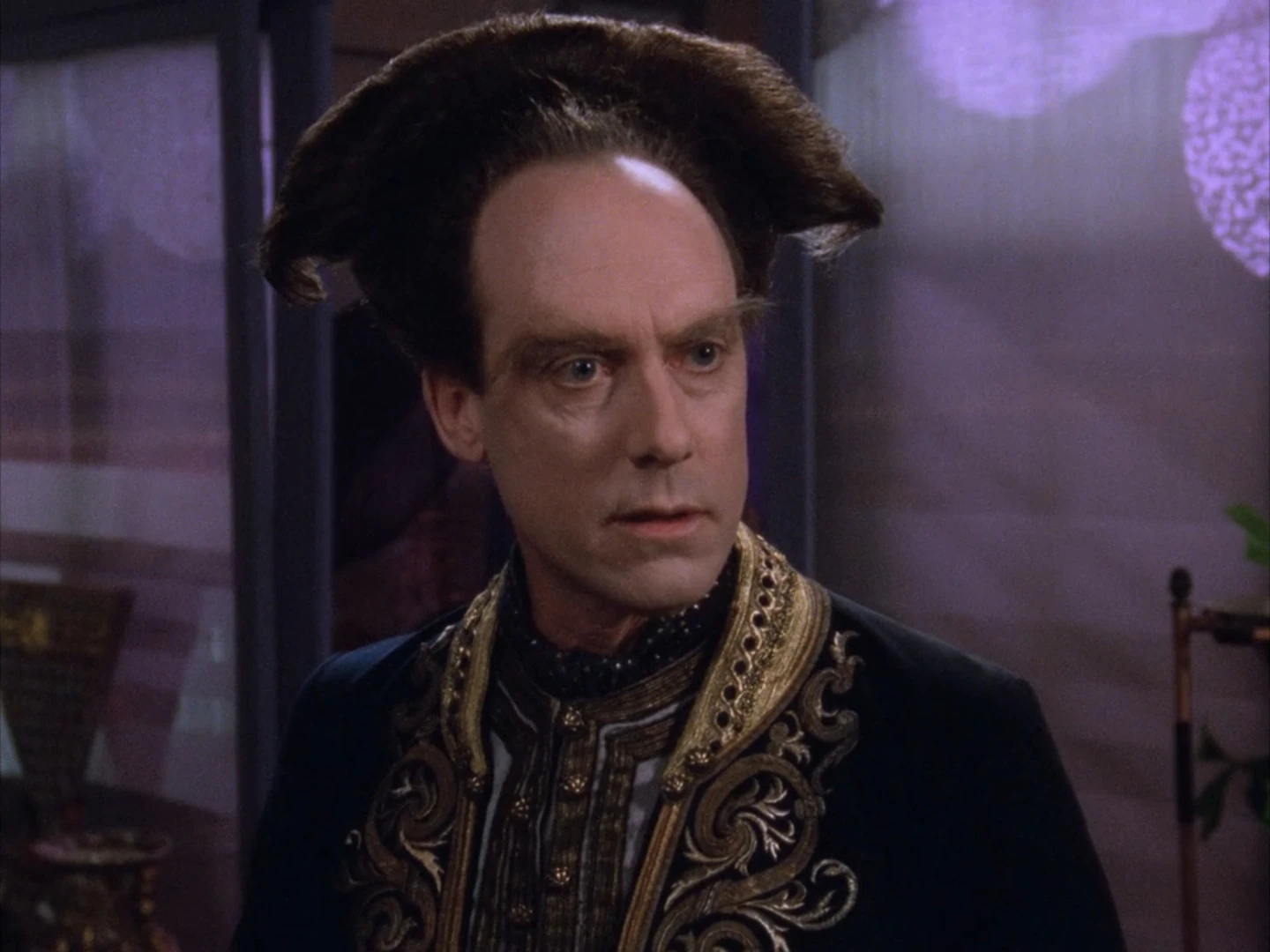
Vir Kotto (usually known only as Vir, and played by Stephen Furst)
Attache to Ambassador Mollari, Vir is a young, impressionable Centauri with a great sense of duty, and eager to please his new employer. He sees his posting to Babylon 5 as a great honour, though Londo tells him it is the joke job handed out to those among their people the Council can't find a proper place for. Vir will soon lose his childlike wonder though, and become both a staunch ally and later a vehement opponent of Londo, while carving his own name in Centauri history.


Lennier (played by Bill Mumy)
A man those who watched the sixties sci-fi classic show Lost in space will know as Will Robinson, Mumy plays attache to Delenn, the Minbari ambassador. But just as Vir's fate will take him places he could never have guessed at, Lennier's place in galactic history is also assured. He is devoted to Delenn, later revealing that he is in fact in love with her.
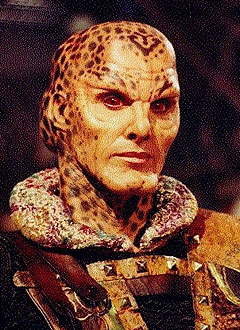

Na'Toth (played by Julie Caitlin Brown, later Mary Kay Adams)

And just as the other two ambassadors have attaches, so must G'Kar. His aide comes in the form of Na'Toth, a determined, fierce female Narn who initially makes no secret of her dislike of her new employer, but whom she eventually becomes fast friends with. 


1.1 "Midnight on the firing line"

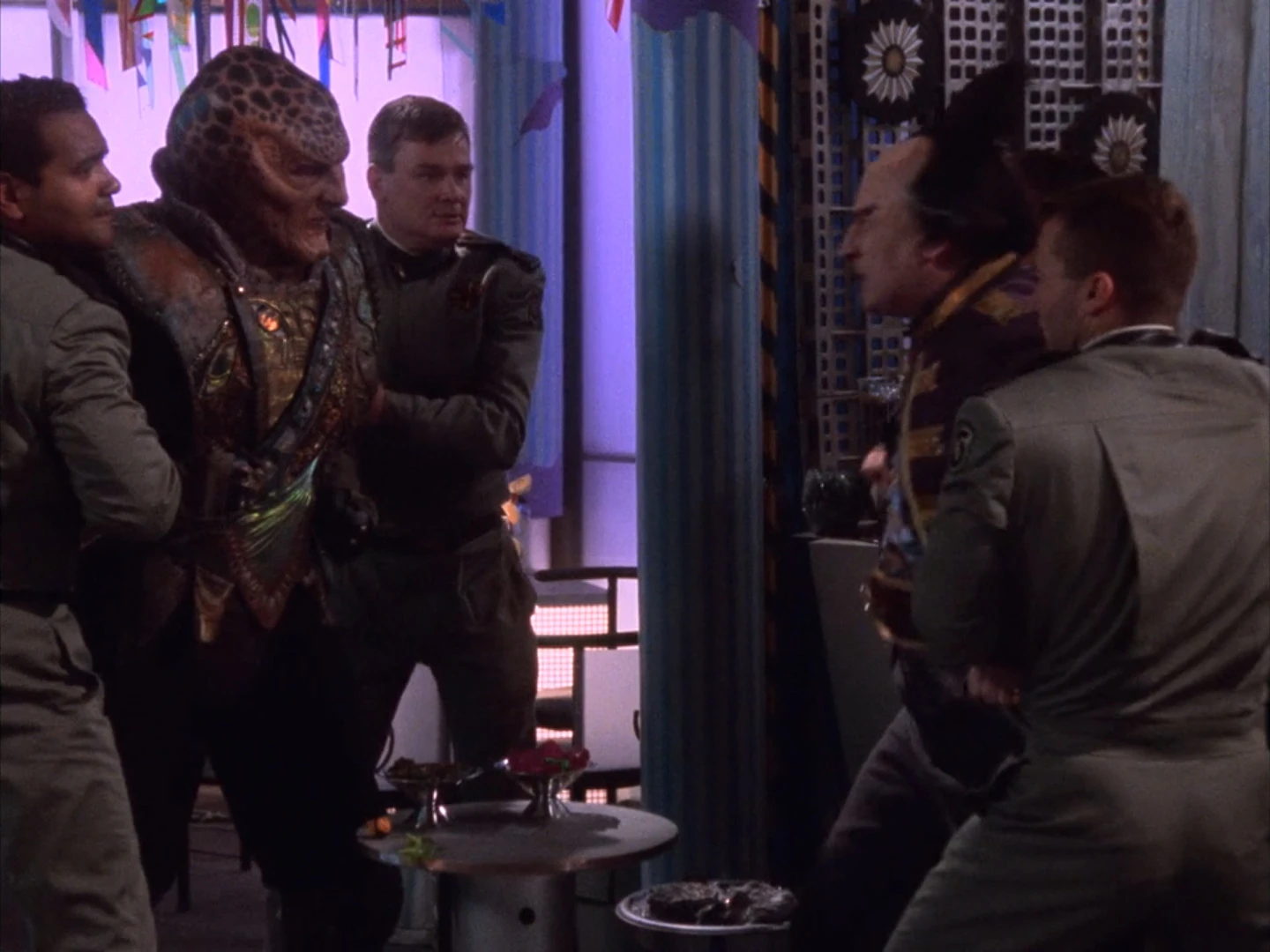
Season one opens on "Midnight on the firing line", with a "Bay of Pigs"-style standoff as Ragesh 3, a Centauri agricultural colony is attacked by persons unknown and destroyed, persons who later turn out to Narns, reigniting the still simmering enmity between the two races' ambassadors on Babylon 5. Londo Mollari accuses his opposite number of attacking a defenceless station, while G'Kar sneers that during the war against them Londo's people had no such qualms, and subjugated whoever and whatever they saw fit. Londo warns that if his nephew, who was stationed at the colony, is harmed, there will be war between the two races.

This is a key element of the show, as in later sf series: war is always looming, seemingly imminent and unavoidable. Man's lust for power and territory and his taste for combat (when I say "man" I refer to all races, obviously, not just humans: the aliens have sadly just as little control over their emotions and their desires as we often have) drives him to fight his neighbour, take his lands --- or in this case, his planet(s) and/or system(s), and it seems there will never truly be a lasting peace. Old grievances are harboured, old hatreds merely pushed down, never forgotten, never forgiven, and everyone puts on the face of the diplomat. But behind that cheerful, often bland and dishonest mask hides the true nationalist, who is ready to avenge past wrongs and bring down bloody retribution on his old enemy.

Other plot strands begin to develop here too: we see the new station telepath, Talia Winters, who reports to the new station second-in-command, Russian-born Lieutenant Commander Susan Ivanova, but is brushed off rudely by the officer. There doesn't seem to be any real reason for this; perhaps Ivanova is just naturally rude? As the series develops, we come to see that yes, in general she is short and curt with people, intolerant of incompetence and unforgiving to those who break the rules, but there is a deeper reason behind her dislike for Winters. It goes to the heart of who and what Talia is, and will be part of a major revelation later. 

Then there's the presidential race back on Earth. The incumbent, Luis Santiago, is being challenged by Marie Crane, whom some give a better chance than she's expected to have. Sinclair is watching the election campaign from Babylon 5, mindful that Earthgov, the seat of authority on the home planet, pay the bills and keep the lights on at the station. Without its continued support Babylon 5 can no longer function and would have to be shut down, so it's important to him that whoever occupies the position of power looks upon the station favourably. He seems disappointed at the end of the episode when it's clear the incumbent has won the election. This may seem odd in the light of later events.


When a Centauri agricultural outpost is attacked off Ragesh 9, Londo Mollari is incensed. Not only is he the Centauri ambassador to Babylon 5, but his own nephew is on the outpost, and he warns of grave consequences should the lad be harmed in any way. Initially, it is unknown who has attacked the colony, but it quickly emerges to be the work of the Centauri's age-old enemy and former slaves, the Narn Regime, striking back at their old oppressors. Meanwhile, Garibaldi heads off in response to a distress call the station has picked up. He believes this to be a sign the raiders that have been operating in the sector are back and intends to deal them a crippling blow. However when they reach the stricken freighter which issued the distress call it is already too late, and Garibaldi can clearly see that the weapons used on the hapless vessel were much heavier and of higher grade than he would have expected. The ante has just gone up.

ISN, the Inter Stellar News network, reports on the race for President of Earth, which is between Luis Santiago, who currently holds the office, and his challenger, Marie Crane. When word of who is responsible for the attack on his people's colony comes through, Londo goes looking for G'Kar and there is an altercation that has to be broken up by Babylon 5 security, but it's unlikely either will let the matter rest there. Garibaldi suspects a leak in station security, as trade routes are kept secret to prevent attacks, the aftermath of such he has just witnessed. Londo promises there will be war if his nephew is harmed, but when he hears back that the Centauri Court are in fact not prepared to take that step over such a distant and insignificant outpost, he keeps this information to himself as he has an emergency session of the Babylon 5 council called to debate sanctions against the Narn Regime.

Sinclair goes to see Kosh, but the Vorlon is uninterested and of no help at all. Of less help is the Senate, a senator telling Sinclair his orders are to abstain from the vote being taken during the emergency council of the council, as to whether to support sanctions against the Narn for their attack on Ragesh 3. Earth, in the middle of an election, does not wish to become embroiled in what is essentially a matter between two other races and in which they have nothing to gain. Sinclair leaves Ivanova in charge, sending her to the meeting while he sets off in pursuit of the last ship known to be on the raiders' target list, a refugee ship with men, women and children aboard. Something has clicked with him, and he thinks he knows from where the pirates are getting their heavy weaponry. At the meeting, G'Kar makes the case for Ragesh 3 having originally been a Narn colony, and that what they are doing is merely taking back what is theirs, but he's not fooling anyone. He does however have more success when he shows the council a live transmission from the colony, which seems to indicate that the Centauri there invited the Narns in, that it was not an invasion or attack. Of course, it's all staged, but things go from bad to worse for Mollari when G'Kar reveals that the Centaurum have already voted not to take any action over Ragesh 3, and he asks Londo why he is then using the council for his own personal reasons?

Thwarted in his attempt to use diplomatic means to achieve his ends, Londo goes in search of G'Kar to extract vengeance himself. Talia however happens to bump into him on the way and accidentally scans him, seeing his intention. She calls Garibaldi, who intercepts him and convinces him to abandon the effort. Meanwhile, having fought off the raiders and rescued the transport, Sinclair finds the command and control ship which just happens to have a Narn observer on board. He realises that, as he had suspected, the Narns have been the ones selling weapons to the raiders, and more, there are coded transmissions which show clearly that the attack on Ragesh 3 was exactly that, an unprovoked and hostile act. He gives G'Kar the unenviable choice of being exposed before the council, or withdrawing his forces from the colony. Unsurprisingly, G'Kar opts for the latter course.

Having avoided the attentions of Talia earlier, Ivanova is buttonholed by her at the casino, where the Russian explains that she does not have anything against her personally, but the organisation she works for. She tells Talia that her mother was a latent telepath, and in order to avoid joining Psi Corps or being imprisoned, she took certain drugs which the Corps administered. Eventually it became too much and she committed suicide.

As the final votes are tallied, it appears that there has been a victory for incumbent President Luis Santiago, who has apparently run his campaign on a promise to concentrate more on keeping Earth's identity in the face of growing alien influence, and to cut the budget, and keep Earth out of wars. With all the conflicts raging through and around Babylon 5, and alien races gaining increasing standing and power there, it looks like Sinclair and his team will have their work cut out for them.

Quotes

Ivanova: “Anything else?”
Talia: “No.”
Ivanova: “Then you'll excuse me, but I'm in the middle of fifteen things, all of them annoying.”

Sinclair: “My father always taught me that the best way to understand someone is to fight him, make him angry: that's when you see the real person.”

Sinclair: “So, who are you voting for?”
Ivanova: “I think I will vote for Marie Crane. I do not like Santiago. I've always felt a leader should have a strong chin. He has no chin, and his vice-president has several. This to me is not a good combination.”

Londo: “What reasonable explanation is there for the slaughter of unarmed civilians?”
G'Kar: “Curious: we wondered the same thing when you invaded our world. The wheel turns, does it not, Ambassador?”
Londo: “Fagh! We should have wiped out your kind when we had the chance!”
G'Kar: “What happened? Run out of small children to butcher?”

G'Kar: “Listen to me, Ambassador! Your time has come and gone! It's our turn now! One night you will wake up and find our teeth at your throat! Sleep well, Ambassador: sleep lightly!”

Londo: “I will kill him, though, sooner or later, one way or the other, Commander. My people have a way, you see; we know how and sometimes even when we are going to die. It comes to us in a dream, uh? In mine, I am an old man – it is twenty years from now – and I am dying, my hands wrapped around someone's throat, and his around mine. We have squeezed the life out of each other. The first time I saw G'Kar, I recognised him as the one from the dream. It will happen. Twenty years from now, we will die with our hands around each other's throats.”
Sinclair: “Twenty years is a long time. Long enough for your people to come to an understanding.”
Londo: “Believe as you wish. Twenty years from now, one of us will be wiser and older or one of us will be dead. Who is to say?”

Londo: “Please, Commander! On the issue of peace I am long past innocence, and fast approaching apathy! It's all a game, Commander, a paper fantasy of names and borders. In the end, only one thing matters: blood calls out for blood.”

Kosh: “They are alone. They are a dying people. We should let them pass.”
Sinclair: “Who? The Narn or the Centauri?”
Kosh: “Yes.”

Vir: “Ambassador? The Council? The Emergency session?”
Londo: “The Council can go to Hell! The emergency session can go to Hell! And you, you can go to Hell too! I wouldn't want you to feel left out!”

G'Kar: “Our two worlds, our two species are more alike than you would think. I would remind you that we were one of the few who were willing to supply you with the weapons you needed during your war against the Minbari. We supported you. You owe us.”
Sinclair: “Not a chance! You didn't support us: Narns will sell to anyone who can afford the credits. But I will give you points for one thing, Ambassador: we are alike. We have plenty of experience of sneak attacks. Pearl Harbor, the terrorist nuking of San Diego, the destruction of our first Mars colony: it's a long and bloody history. Do you know what we learned from it? That the sneak attack is the first resort of the coward.”
G'Kar: “Now just a minute...”
Sinclair: “You didn't even have the decency to pick a military target! A poorly-armed civilian colony: what a challenge that must have been to the great Narn military! What's wrong, Ambassador? Don't have the guts for a fair fight?””
G'Kar: “In another place I would have you skinned alive for saying that!”
Sinclair: “You want me, you know where to find me.”

Senator: “Commander, don't you realise we have an election in less than twenty-four hours?”
Sinclair: “Senator! Colonists are dying!”
Senator: “That's not the issue! We just came out of a war. What are you trying to do, start another ? The Earth Alliance can't go around being the galaxy's policemen! They want to fight it out, let them! Just keep us out of it, at least till after the election.”

G'Kar: “If you want to talk about lies, Ambassador, what about your own lie of omission? Is it not true that your own world has voted against taking any action over the liberation of Ragesh 3?”
Londo: “Yes, but ...”
G'Kar: “Then why are you asking this council to take actions that even your own government consider inappropriate? This council should not be used to carry out your own personal vendetta.”

Londo: “Mister Garibaldi? Just now: would you really have killed me?”
Garibaldi: “Yes. Yes I would have. But I'm just as glad I didn't have to: the paperwork's a pain in the butt.”


Ivanova: “For ten years a man in a grey suit came to our door once a week and he gave her the injections. They were strong: terribly strong. Every day we just watched her drift further and further away from us; the light in her eyes just went out, bit by bit. When we thought she could go no further, she took her own life.”  

Important plot arc points:

Londo vs G'Kar/Centauri vs Narn
Arc level: Red
This is an ongoing struggle between the two races which will have a massive effect on both of them in the future, and also on the wider galaxy. The argument between the two ambassadors over the taking of Ragesh 3 escalates to a point where they have to be separated, and later Londo plots to kills G'Kar, but more than that, Londo has had a dream. He tells Sinclair that the Centauri are able to see their own death in dreams, and he has seen himself, many years hence, squeezing the life out of G'Kar as the Narn strangles him back, and he knows the two will eventually kill each other. This, too, will turn out to be so much more than it seems on the surface. Also, as the series progresses, there will be no clear good or bad guy, loyalties and sympathies will shift like desert sands, and it will become hard to know who is in the right, for a long time.

Kosh:
Arc Level: Red
The enigmatic Ambassador Kosh is the first Vorlon to venture beyond his home planet, and like the Minbari in the pilot movie, he seems more inclined to hold a watching brief than get involved in any of the politics of the station. When Sinclair asks for his help in sanctioning the Narns for invading Ragesh 3, his reply is typically ambiguous and mysterious.

Telepaths and Psi Corps:
Arc Level: Orange
The revelation that Ivanova's mother was a telepath is a relatively minor one, considering what is to come, and Talia Winters has a huge role to play that will only become clear near the end of season two. Psi Corps itself will become more involved and entangled with the affairs of the station, proving themselves at times a deadly enemy, not only to Babylon 5, but to all races.

The presidential race:
Arc Level: Red
Although merely a footnote to the story here, the leadership on Earth will turn out to be a pivotal point which will run through the end of season two and right into season four, laying down some totally jaw-dropping moments on the way. The end of this season will see the beginning of that seachange, and it will not be for the better!


Welcome to the Couch Potato!


Television. What a wonderful tool it can be, a way of informing, educating or just plain entertaining us, and these days with hundreds, even thousands of channels at our eager fingertips, to say nothing of online subscription services, torrents and set-top boxes that record four shows while you watch a fifth (now, who has that much time!) there is even more telly to watch than ever before. However, although I grew up watching TV and still watch loads of it, I'm not your average couch potato (despite the blog title!) who will watch anything as long as there is colour and sound to keep me in a persistent state of almost drugged happiness. I don't watch everything; there's a lot (and I mean a LOT) I don't watch, so I'm quite selective in my viewing habits. But when I do watch something it usually leaves an impression on me, and I'm not one to watch a show and then forget about it.

Which is where this blog comes in.

Here you will find not only long and detailed (and, it must be stressed, spoiler-laden) synopses of my favourite TV shows, and movies, but comments, observations, quotes, trivia and anything else I can think of to add to the episode writeup. The main thing to keep in mind is that while these may indeed be seen as recommendations to try this or that series, I will be writing the reviews in a manner consistent with those who have already seen them, so as I say no important parts, plot strands, revelations or surprises will be kept from the reader. That's you. If you decide to read. Should you not have seen a series I feature, and decide to try it, stop after the main introduction or the chances are it'll be ruined for you. Of course you can read further, but then you only have yourself to blame if you do.

My favourite shows are science-fiction and fantasy, so I guess I'm a nerd, but I watch a ton of other stuff too. I try, though this blog, to impart my sense of satisfaction with, awe at or delight with a show, and explain why I think it's so good. I'm always open to comments and discussion - the lifeblood of any blog really - and if anyone would like to contribute by writing about a show they like which I have not featured, that's very welcome too. 

One more point to bear in mind: I don't intend to fill these posts up with pictures, videos and suchlike, though some will be entered certainly. My hope is that people will be interested enough to read through what I have written. There will be a lot of it, that's for sure, but the whole idea of people not wanting to read "a wall of text" annoys me. Isn't a book, using that logic, just a wall of text? So I make no apologies for such walls: if you don't want to scale them, you won't find what's behind them. 

In the next post you'll find a list of the shows currently in development, with others to follow in due course. 


Babylon 5: Our last, best hope for peace - introduction and pilot episode


Our last, best hope for peace: the genesis of Babylon 5

Probably the only TV drama, certainly the only science-fiction TV drama, to be conceived and laid out as a five-year story, a TV novel which was intended to span five full seasons of the show, and in the end did, Babylon 5 was the creation of Joe Micheal Straczynski, usually known as "J. Michael Straczynski" or more often just "JMS". Aficionados of the programme, like me and probably millions of others, as well as critics, will tell you that "JMS" was as instrumental to not only the creation but the development of Babylon 5 as Gene Roddenberry was to Star Trek. In fact, early in its inception JMS was heard to remark at a science-fiction convention that he believed his new series could end up "giving Star Trek a run for its money", to which an unimpressed reporter quipped "Yeah, and Bill Clinton will be in the White House!" Well, we all know how that turned out, don't we?

But the above serves to illustrate how tough an arena television sci-fi was in the early nineties. The Star Trek franchise had pretty much a stranglehold on TV sci-fi, while the world of cinema had really not come up with anything substantial at the time, leaving Star Wars as the main moneyspinner and seen therefore as the way forward. Cinema had mostly whimsical tales like the Back to the future series, Arnie in the Predator movies and Gremlins all over the place. Of course there was Terminator 2 and Alien 3, and later on Stargate brought a measure of respectability to sf movies, but up to even the end of the 90s the main movers in terms of sci-fi cinema were still those that trod Roddenberry's somewhat tired and hackneyed stories of all humanity living together in semi-Utopian peace.

It wouldn't be till really the tail-end of the 90s, when The Matrix burst upon our cinema screens like an avenging angel and slapped us all upside the head, that science-fiction would really achieve its rebirth on the big screen, and as for the small, well. Nothing could and did touch Star Trek for over thirty years, with series like Logan's run, Lost in space, V doing what they could, and though the UK did well to fly the sf flag with series like Blake's Seven and Doctor Who, darker, more adult sort of programmes than their mostly light, fluffy, almost comedic in ways US counterparts, science-fiction was still really viewed as "something for kids". Sure, Doctor Who is now more aimed at a family-friendly market, but back in the sixties, seventies and eighties it was dark and disturbing, and we all hid behind the sofa when the Daleks came onscreen! Exterminate!

The problem was that, as I have mentioned,  most television networks didn't really take sci-fi seriously. It was the pervue of the geek, the loner, the misfit. Families would not watch it, so any programmes commissioned --- or most, at any rate --- in the US had to be "made family friendly", by adding in cute characters or comic relief elements, and having everyone back on the starbase in time for tea, as it were. Only the British ones dared to do things like kill off characters, see the aforementioned Blake's Seven and indeed Space: 1999, some of the darkest sci-fi you will ever come across. Okay, so the sets were wonky and the acting wooden --- should that be the other way round? Er, no --- but the stories were often top-notch, and occasionally the stuff of nightmares.

Which is how it should have been, anyway. Space is a frightening place. Films like Alien and 2001: A space odyssey showed us that, as did Event Horizon decades later, though that was really more a horror movie set in space (then again, you could probably level that same charge at Alien...) The happy, jolly, everyone-gets-along-fine-whether-they-have-legs-or-tentacles idea was a nice one, but ultimately fatally flawed. After all, humans can't even get on with each other without trying to blow each other up or exterminate (!) one another, so what makes us think we'd get on with aliens? Or that they'd get on with us? Maybe they're the badasses of that sector of the galaxy. Either way, they're unlikely to just drop in for a cup of proto-tea and a mega-biscuit now are they?

So with Star Trek portraying its general "humans are great and want to save everyone and don't you wish you were like us though if you're not that's ok because we're so tolerant of other cultures and lifeforms" all across our televisions and film screens, and movies like The Matrix, Dark City and Inception years or even decades away, what serious science-fiction was there on the box? Although Ronald D. Moore later revamped it into a tough, dark, gritty and realistic portrayal of Man's struggle to survive against an implacable enemy, Battlestar Galactica in its original incarnation was little more than a shoot-em-up adventure buddy movie in space, on TV. Buck Rogers in the 25th Century was much worse, and although Star Trek would grow up with the third and fourth seasons and the newly-born Deep Space 9 would go on, after its second season, to redefine what mature, dark, intelligent televisual science-fiction could and would be, the airwaves were jammed with half-serious, half-comedic, in some cases downright awful attempts at sci-fi programmes, as everyone tried to jump on the Star Wars/Star Trek bandwagon, making the fatal flaw of trying to be just like them.

Straczynski, seeing all this, did not want to go that route. He had come up watching the likes of Hill Street Blues reshape and change what was perceived as the general cop show, and he wanted to do the same for sci-fi with his own new show. This would be a heavily character-driven series, where people's decisions would weigh on future events, where one road taken might lead to war whereas the other might lead to peace, or something as simple as a chance meeting or offhand remark might have huge ramifications down the road. Most importantly, JMS decided to introduce, or at least expand on, the idea of a story arc. This was seen almost as television suicide by the networks: the idea that people would follow a series, noting all the little "clues" to future events, and that they would have to see almost every episode or risk missing a big piece of the puzzle and thereby end up being confused or missing a vital point, seemed to the execs beyond the American people's capabilities. More, it was not, they believed, what the audience wanted. They didn't dedicate their lives to a TV show. They watched and flipped between channels, and a series like Star Trek or Buck Rogers could certainly be watched one week and not for the next three, and then if they liked pick up after that without fearing they had missed some vital developments. By and large, sci-fi shows --- and this included Roddenberry's behemoth --- did not attach huge significance to events that transpired from week to week.

The first to do so of that franchise was Deep Space 9, where once it got into the main plot, there were standalone episodes, but even then something might happen in one of them that would reflect back in future ones. But the series followed a basic storyline, and like reading a novel, you couldn't just pick it up again three chapters in and know what was going on. Of all the series at the time on TV, sci-fi or otherwise, DS9 was the closest in terms of structure to what Babylon 5 would become.

And there was some controversy surrounding both series, as they hit the air around the same time. Not only that, Paramount --- who produced the Star Trek franchise --- had been offered the chance to back Babylon 5 but passed, and then mere months later announced the debut of their new Star Trek series. Both were set on space stations --- the first time any sf TV show had been located such a place --- and both would have major, galaxy-spanning wars and draw on elements of ideologies and religious themes throughout their run. Both would allow for major characters to be killed off, and of course as already mentioned both would follow a series arc. The similarities have been a topic od contention and hot debate between opposing fans of the series, but I'm not going to concern myself with them here, as I don't feel they're relevant to this article.

And so, on February 22 1993, the lead-in pilot movie for the series, originally just called Babylon 5 but later changed to The Gathering, aired on Warner Bros PTEN channel, although I have a personal story about that. Living as I do in Ireland I of course had and have no access to the US networks, and happened to stumble across the movie in a video (look it up) rental shop and thought it looked good. Taking it home and watching it I was rapt, and thought my god how can someone not make a series out of this? It seemed to be setup for at least a sequel, with its closing line "Babylon 5 is open for business!" and I just thought damn it, another great movie that could have led to a series, and left it at that. Well, I didn't. When I brought the video back I asked the guy behind the counter if he knew if there were any more movies, or a series even, and he grunted (no doubt very interested in my query as he carefully polished the slipcase on Vampire serial killer babes IV: Fangs Baby or some such nonsense) that he didn't know. Substitute the word know for the word care and I think we had a better and more honest answer to my question.

So home I went, dejected but not surprised. Surprise was, however, to the nth degree when some months later Channel 4 announced a brilliant new science-fiction series coming soon, called, yeah, Babylon 5! I could not believe it, and quickly set about making sure I had enough blank tapes (I said, look it up! What do you think Wiki is for?) to ensure I recorded every episode, as through some cruel caprice of the gods it was airing at something like 5pm, while I was still at work. Ah, but with a video recorder (look, I'm getting really tired of you...) there was no reason I should miss a moment of what I felt sure would be my new favourite science-fiction programme!

As, of course, it proved to be.


The pilot movie that would lead-in the series, should it be commissioned, The Gathering (originally just called Babylon 5 before it was clear there would even be a series) is important in many ways. Its plot sets up the backdrop to the series, and introduces us to many of its characters, even if some of those would not last beyond this film. It hints at the very beginnings of a deeper story, and even from this standalone movie you can see the depth and intricacy of JMS's writing, so that it woudl have been a shame --- indeed, a crime --- had the series not been taken up. But happily it was, and the rest is television history.

CHARACTER AND CAST FOR "THE GATHERING" (Characters/actors who were changed after this are italicised, with notes on who replaced them)

Micheal O'Hare as Commander Jeffrey Sinclair

Jerry Doyle as Security Chief Michael Garibaldi

Mira Furlan as Ambassador Delenn

Tamlyn Tomita as Lieutenant Laurel Takashima (Replaced by Claudia Christian, playing Commander Susan Ivanova)

Andreas Katsulas as Ambassador G'Kar

Johnny Sekka as Doctor Benjamin Kyle (Replaced by Richard Biggs, RIP, playing Doctor Stephen Franklin)

Peter Jurasik as Ambassador Londo Mollari

Blaire Baron as Carolyn Sykes (Replaced by Julia Nickon-Soul, playing Catherine Sakai)
John Fleck as Del Varner (Never seen again)
Peter Hampton as the Senator (Never seen again)
Patricia Tallman as Lyta Alexander (Replaced for seasons 1 and 2 by Andrea Thompson as Babylon 5's onsite telepath, but Lyta returns from the end of season 2 and features quite prominently, if sporadically, during the third fourth and fifth seasons)

The year is 2257. Mankind has made contact with alien races and moved out into the galaxy, mostly by way of "jumpgates", technology shared with them by the Centauri, a much advanced race, and have built a space station, which they call Babylon 5, in neutral space. Here, all races are welcome. It's a trading post, jumping-off point, conference centre, diplomatic post and holiday destination for humans and aliens, and an important factor in keeping the uneasy peace between the various races. Babylons 1 through 4 have all suffered various untimely demises, with the final station prior to this, Babylon 4, actually vanishing twenty-four hours after going online. This small snippet of information is an example of a seemingly-offhand remark that will turn out to have massive importance as both season one and three come to a close.

There are five main races in this part of the galaxy, including humans, and they are the "superpowers" that run things. They are vastly different, each with their own idelology, traditions, history and outlook, and while some are content to live in peace there are old wounds that are festering between others, wounds which will not heal and which will all too soon plunge this sector of the galaxy into war. For now though, a quick look at each of these aliens.

Minbari: Without question the most logical, spiritual and coldly clinical race, the Minbari revere life and peace but are nevertheless divided into three classes, or castes: Worker, Warrior and Religious. They have just come off the back of a vicious war with humankind, during which Earth itself was almost overwhelmed, but for the fact that the Minbari, with victory within their grasp and all opposition to them smashed, mysteriously surrendered at what came to be known as The Battle of the Line, Earth's last stand against the implacable enemy. The reason they halted hostilities will become clear, and again have a huge and profound effect on the story arc, later on. When we meet them in The Gathering, they seem more observational than confrontational, almost monklike, as if they're waiting for some great event to unfold.

Narn: Looking like reptilian humanoids, the Narn are a proud race of mighty warriors, but not so long ago were subjugated by their old enemy, the Centauri, who enslaved them for years, raping their planet and stripping it of all its resources, leaving the Narns far behind in terms of technology. Due to their treatment at the hands of the Centauri, the Narns are out for revenge and will side with anyone against their old oppressors. They are also trying to gain any technological or military advantage that would allow them to wipe out the Centauri.

Centauri: An ancient race of people whose lifestyle and traditions seem to be based on that of the Roman Empire of antiquity, the Centauri are a fallen people. They still have power, but used to command a vast empire which has shrunk as their influence in the galaxy has waned. They long for "the old days", and keep an abiding hatred and contempt of the Narn in their hearts, their other desire being the elimination of the whole race, which they consider inferior. The Centauri were the ones who sold jumpgate tech to the humans, and so are essentially their oldest and closest allies among the Five Races. They see the humans as less evolved, younger versions of themselves when they were at the height of their power.

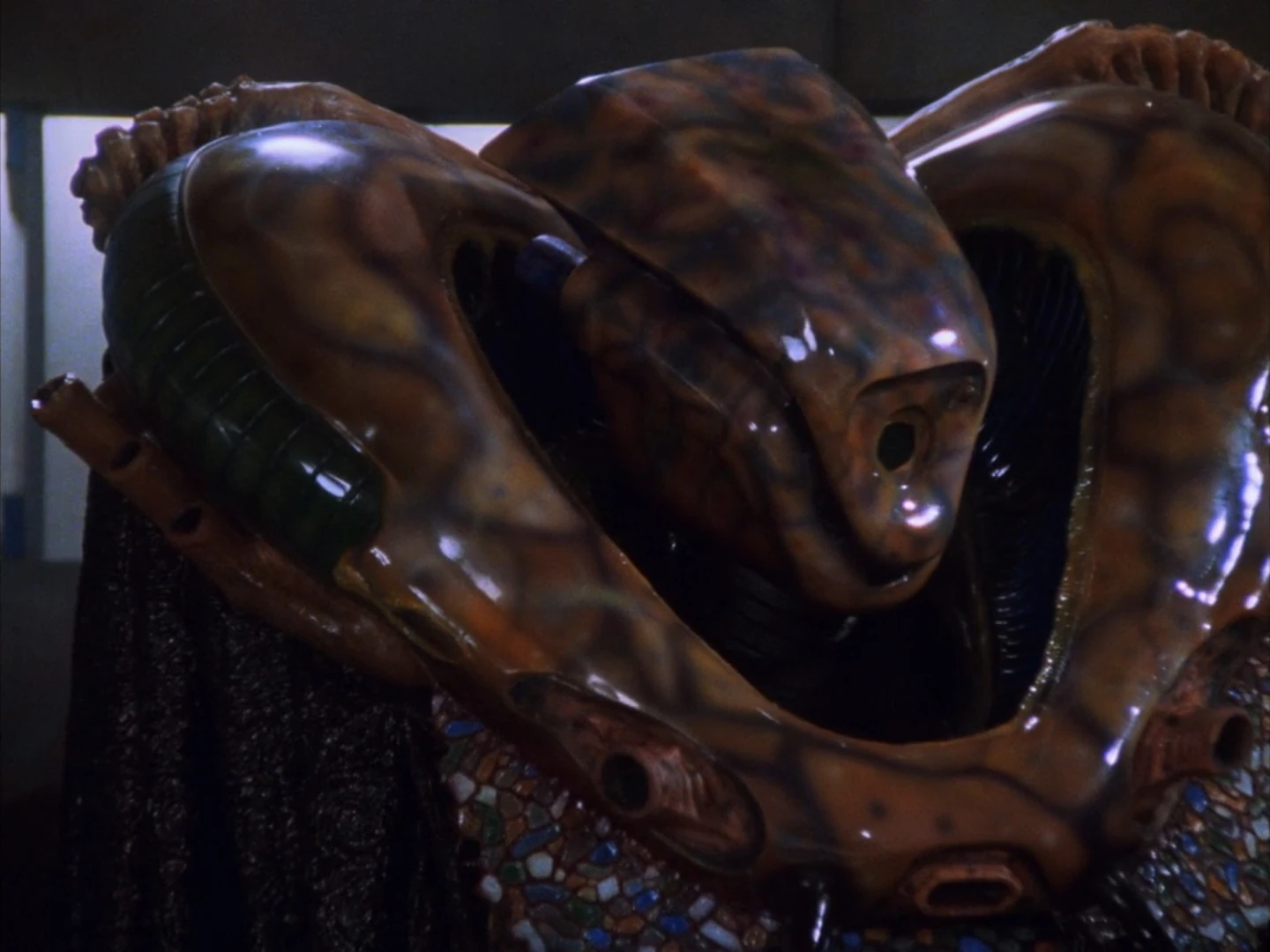
Vorlons: A mysterious race cloaked in secrecy and rumour, no-one has ever seen a Vorlon. They leave their home planet but seldom and when they do, always wear a bulky encounter suit, as the atmosphere of other planets is lethal to them. At the time this takes place, hardly anything is known about the Vorlons, and legends about them include one which holds that if anyone sees a Vorlon without his encounter suit they will turn to stone.

As the movie opens, station commander Jeffrey Sinclair is waiting to welcome a Vorlon as the fourth ambassador to Babylon 5. The first race we meet however is one of the Narn, a man called G'Kar (the "g" sounded as in "genius") who is in fact the Narn ambassador to the station. He comes across as belligerent and pushy, a thoroughly nasty fellow. The station's resident telepath arrives and greets Sinclair. Her name is Lyta Alexander (lee-ta) and through her induction to the station we learn various things, such as that the aliens resident on the station have their own sector (Green) where their quarters can be maintained with the correct mix of atmosphere and gravity to allow them live safely. Sinclair's security chief, Michael Garibaldi, opines that he does not trust telepaths. This will become a recurring theme throughout the series.

The arrival of the ambassador from Vorlon (like some of the races here, their homeworld is the same name as their race) occurs unexpectedly, as his ship comes through the jumpgate early, and Sinclair goes to meet him alone. However, when he extends his hand to greet the ambassador, the alien falls down and is rushed to medlab. Fearing that the ambassador may die, thus provoking a lethal response from his government, Dr. Benjamin Kyle, Chief Medical Officer on the station, asks Lyta to scan the Vorlon's mind telepathically. She is reluctant, as firstly scanning without the person's permission or consent is against the law, and she could be thrown out of Psi Corps, the body which regulates, trains and employs all telepaths; and secondly, this could conceivably be seen as a hostile act, the invasion of the privacy of an alien ambassador's mind, the breaking of diplomatic immunity in its most literal sense.

However, when the alternatives are put to her she has no choice but to agree, and is shocked to see in Ambassador Kosh's mind the picture of Sinclair poisoning him by attaching a small disc to his exposed hand. With such irrefutable evidence, a trial is convened and Sinclair is relieved of duty. Unconvinced, however, Garibaldi, who is his friend and served with him on the Mars colonies, and who got the job here from the commander, investigates to see if there is another answer. Meanwhile, the politics and powerplays that drive and characterise Babylon 5 come to the fore, as representatives jockey for position, eventually voting to allow Sinclair to be extradited to Vorlon to stand trial for murder.

But Garibaldi is interested in a traveller who came aboard about the same time as Lyta, a man called Del Varner, who is a petty thief and smuggler wanted in several systems. He breaks into the man's quarters but is shocked - and annoyed - to find Varner dead. So much for that lead! However, as he tries to figure out a new strategy, it seems that Lyta is in medlab trying to finish Kosh off by turning off his life-support, before Dr. Kyle catches her. As she runs off though, she walks in the door and it's obvious there is an imposter on the station.

More or less confined to quarters, Sinclair tells Carolyn about the Battle of the Line, and his part in it. He tells her that as the battle reached its height he decided to ram one of the Minbari cruisers, determined to take one of them with him, but he blacked out and when he came to it was twenty-four hours later, and the war was over. The Minbari had unaccountably surrendered, and no-one has ever been able to say why.

Looking further into the dead smuggler's records, Garibaldi discovers that he had been trafficking in specialised items, and his last run had taken him to the Antares sector, where he had got his hands on a changeling net, a portable force-field that allows one to bend images around it, essentially enabling them to take on any shape or form they wish. Including that of the commander! So it wasn't Sinclair who had poisoned Kosh - as Garibaldi had been sure anyway - but Varner, using the changeling net to look like him! But... Varner is dead, so who killed him, and why? Had he an accomplice? A second suspect, who even now is running around the station, probably at this point trying to get off it?

He has Takashima use the station's scanners to pinpoint the huge energy signature the changeling net would put out, and they discover that there is indeed a second man, or rather alien. An assassin from a Minbari warrior caste, who once they have overpowered him tells Sinclair "You have a hole in your mind!" That cryptic remark resonates with the commander, as he knows that there is a twenty-four hour period that he can't account for during the Battle of the Line. It's a phrase that will come back to haunt him, and lead to a massive development and finally revelation as the series progresses.

Once Sinclair's innocence is established then, everything, for now, goes back to normal, and the massive station, with the recovered Ambassador Kosh installed as its final representative, is opened for business.

Important plot arc points:
This is where I will refer to scenes, people, quotes, occurences, anything that will later have a large impact on future episodes/seasons. I'll rate them from Green through Orange to Red, which will correspond to their importance and how they influence the series and the plot as a hole. If, in later seasons, they tie in to a previous plot point, I'll reference that.

The Battle of the Line
Arc Level: Orange
The final defence of Earth from the attacking Minbari warfleet, the Battle of the Line was the last stand against the invasion fleet. It has gone down in human (and Minbar, and other) history as one of the bravest and yet most futile actions ever, and yet it worked (or seemed to) as the attacking fleet stopped short of destroying Earth, and in fact surrendered. Many who were there at the time believe something else happened: they know they were outmanned and outgunned, and were losing, had lost the war. There was no reason why an enemy vastly superior, on the very cusp of victory, would suddenly decide to end hostilities. Sinclair would later say "Maybe the universe blinked!" but the truth will turn out to be very much more stunning and unbelievable than that.

Narn vs Centauri
Arc Level: Red
The enmity between the Narn and the Centauri, the oppressed against the oppressor, the conquered for the conquerors, is an old wound that is still fresh. It means no Narn would ever trust a Centauri, and very much vice versa. The Centauri see the Narn as vile, backward, subhuman beings who are only good as slaves, and though they were eventually forced off Narn in a war of attrition, they still consider the planet theirs. They do not accept that they were defeated, merely that it became "too expensive to be worth staying". The relationship between the two races will form a pivotal strand of the plot, and in a tremendous piece of writing our attitudes towards and opinion of each race will change radically as the seasons progress.

Vorlons
Arc Level: Red
Though having almost a peripheral role in this pilot movie, the mysterious and enigmatic Vorlons will become the puppet masters of the second and third seasons, leading into the fourth, and will become more entangled in and important to the fates of not only humans, but all races.

Lyta Alexander/Telepaths/Psi Corps
Arc Level: Red
Although Lyta is replaced for seasons one and two by another telepath, the role of their parent organisation, the dark and shadowy, Orwellian Psi Corps, will become more pronounced and deep as it insinuates itself into the life of the station and makes its own plans for using certain members of its staff, resulting in a massive power struggle that will have cataclysmic consequences down the line.

"You have a hole in your mind".
Arc Level: Red
This seemingly incomprehensible and unimportant remark will impact hugely on the truth behind the Battle of the Line, why the Minbari surrendered and why Commander Jeffrey Sinclair is key not only to the fate of humans but also to the rest of the galaxy. However, we will not find out exactly why until close to the end of season three, in an explosive revelation.

Quotes

Commander Sinclair to tourist, about to make an, ahem, assignation with a girl alien: "I wouldn't. You know the rules about crossing species. Stick with the list."
Tourist: "What are you, a bigot or something?
Sinclair: "No, but you've obviously never met an Arnassian before. After they're finished, they eat their mate!"

Ambassador Londo Mollari to Garibaldi: "You make very good sharks, Mister Garibaldi. We were pretty good sharks too once, but somehow, along the way, we forgot how to bite."

Londo (after Garibaldi has departed): "See the great Centauri Republic! Open nine to five, Earth time!"

Generic business man to Lyta Alexander: "Some day I'm gonna find the guy who thought up the idea of renting telepaths to businessmen, and I'm gonna kill him!"

Ambassador G'Kar to Lyta, on the subject of creating a race of Narn telepaths: "Would you prefer to be conscious or unconscious during the mating? I would prefer conscious but I don't know what your... pleasure threshold is."

Londo to Garibaldi: "I suppose there will be a war now? All that running around and shooting at one another: you'd think that sooner or later it would have gone out of fashion!"

Dr. Kyle: "There are moments in your life when everything crystallises, and the whole world reshapes itself, right down to its component molecules, and everything changes. I have looked upon the face of a Vorlon, and nothing is the same anymore."

QUESTIONS?
Why does Delenn abstain from the vote to extradite Sinclair to the Vorlon homeworld? When she says she is here merely to observe, what is she watching?

What was the Minbari assassin's involvement with G'Kar? Why does he meet him in the Alien Sector where he tells the killer "there's been a complication"? What has he to gain from the assassination of Ambassador Kosh?

Was there a connection between the fact that the poison used on Kosh can only be found in the one sector from which Carolyn had returned? Was it merely coincidence that she arrived at the station twenty minutes before the assassination attempt?

What really happened to Sinclair at the Battle of the Line?

What did Dr. Kyle see under Kosh's encounter suit?

Next post I'll be looking at season one, going episode by episode through it and also giving some pointers as to where the five-year story is going. Season one of Babylon 5, "Signs and portents", next.


List of shows covered

Babylon 5
Red Dwarf
Supernatural
Frasier
Mayday
Doctor Who
Life on Mars
Robin of Sherwood
Futurama
The Hitch-Hiker's Guide to the Galaxy
The New Statesman
Les Revenants (The Returned)
House of Cards (BBC original)
The Onedin Line
Love/Hate
Spooks
The Apprentice (all three series: US, Uk and Ireland)
Father Ted